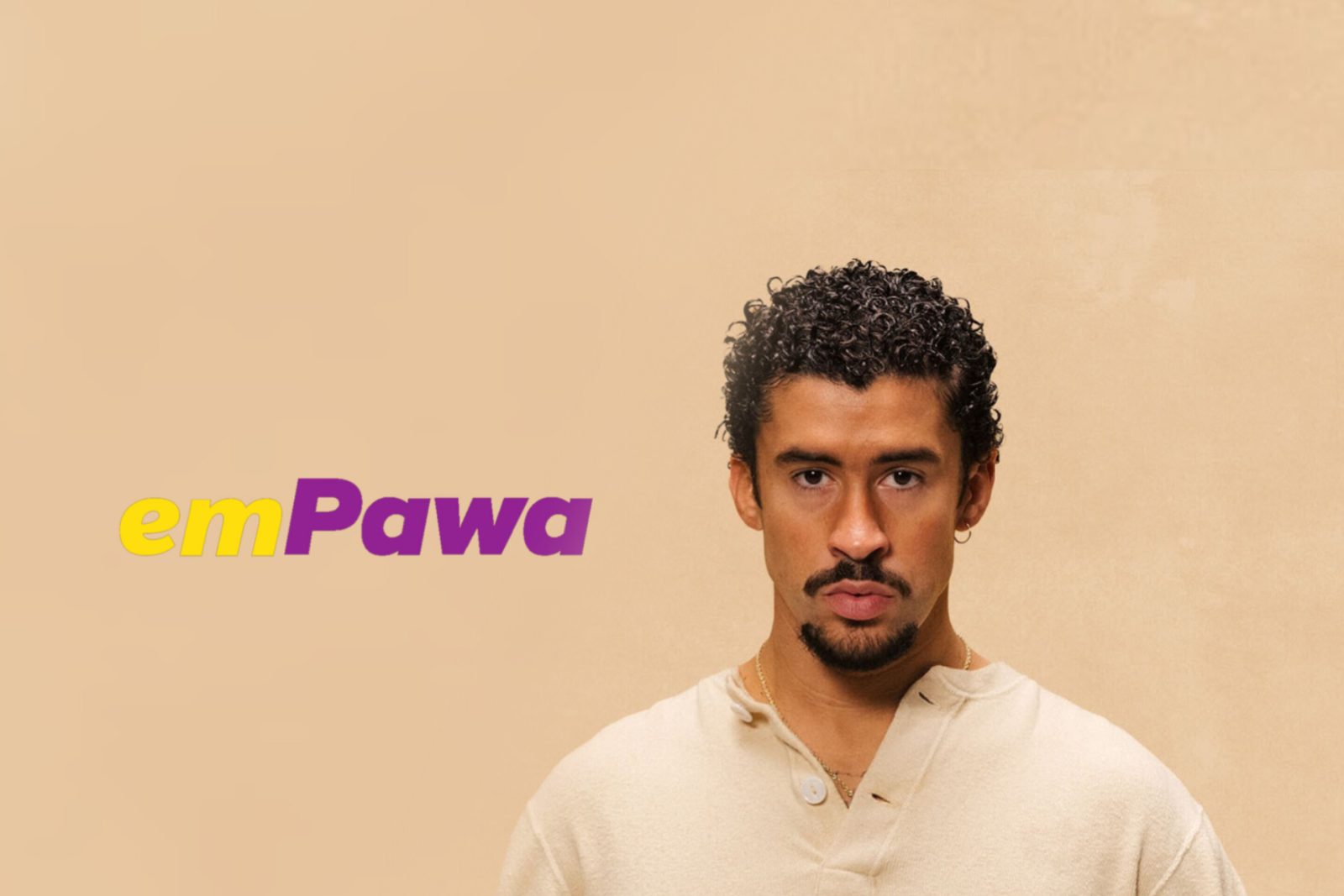
A copyright dispute linking Nigerian music executives and one of Latin music’s biggest stars has now turned into a costly legal mess.
Puerto Rican global superstar Bad Bunny is reportedly asking a U.S. court to make emPawa Africa, the label founded by Mr Eazi, pay $465,612 in legal fees after a copyright case tied to one of his songs collapsed before it could be fully argued in court. Multiple reports say the dispute centered on claims that Bad Bunny’s song “Enséñame a Bailar” used elements from “Empty My Pocket,” a track associated with Nigerian singer Joeboy and producer Dera.
What makes this story even bigger is that the court did not actually rule on whether copyright infringement happened. Instead, the case appears to have fallen apart because of procedural issues, missed deadlines, and legal withdrawals, meaning the legal fight ended without a final decision on the core sampling allegation.
How the dispute started
At the center of the controversy is “Empty My Pocket,” a song produced by Nigerian producer Ezeani Chidera Godfrey, popularly known as Dera, for Joeboy. According to reports, Dera alleged that Bad Bunny’s “Enséñame a Bailar,” a track from his massively successful 2022 album Un Verano Sin Ti, incorporated a sample or musical element from the Nigerian record without proper authorization.
The issue reportedly dates back to 2022, when emPawa Africa and related parties began seeking what they described as proper recognition, credit, and compensation over the alleged use of the work. Reports indicate that by February 2023, frustrations around the matter had already become public, with Mr Eazi accusing the opposing camp of failing to properly engage on the issue.
Below is a tweet by Mr Eazi to Bad bunny back in 6th February 2026.
Yo @sanbenito you need to tell your lawyers to stop messing around and clear that Joeboy rip off on your album
— Sir Eazi (@mreazi) February 6, 2023
Badbunny @sanbenito incase you are not sure what song I’m talking about
— Sir Eazi (@mreazi) February 6, 2023
Joeboy song – https://t.co/K6Cx2au7eZ https://t.co/nbstmxjieP ( Your song )
Ain’t no way you produced and sang an Afrobeat record lol
Eventually, the matter has moved from online frustration to the courtroom.
Why emPawa Africa was involved
This wasn’t just a random fan theory or internet music comparison. The matter escalated into a formal legal dispute in the United States, where Dera and emPawa Africa were reportedly listed as plaintiffs in a copyright infringement case filed in federal court.
For emPawa Africa, the issue carried weight beyond just one song. If a Nigerian work was indeed used without valid clearance, it would have raised bigger questions around cross-border music licensing, African creator protections, and whether African music rights are always taken seriously in the global industry.
That’s part of why this story has hit such a nerve in African entertainment circles. It taps into a wider concern many artists and producers already have, that African sounds are often admired globally, but not always credited, cleared, or compensated properly.
The defense: a claimed clearance already existed
Bad Bunny’s side reportedly pushed back by arguing that the material in question had been properly cleared through Lakizo Entertainment, a company said to have had distribution ties to the song at one point. That argument became one of the key pillars of the defense.
However, the plaintiffs reportedly argued that Lakizo did not have the authority to grant that kind of clearance in the first place. That disagreement appears to have opened up a more complicated rights issue: not just whether a sample was used, but who actually had the legal power to approve it.
And that’s where the case became more messy than straightforward.
Why the lawsuit collapsed
Instead of reaching a dramatic courtroom conclusion over music copyright, the case reportedly began to unravel due to procedural failures.
According to multiple reports, Dera’s lawyers withdrew from the case in January 2026, citing “irreconcilable” or “irreparable” differences over legal strategy. After that, more problems followed. emPawa Africa was reportedly dismissed as a plaintiff after missing filing deadlines, and Dera himself allegedly missed a key discovery hearing and then failed to meet another major court deadline in March.
A U.S. federal judge later dismissed the case, with reports stating that the court concluded the action had effectively been abandoned. That decision shut the case down with prejudice, which generally means the same claim cannot simply be refiled in the same form. That detail matters a lot.
Because in plain English? The case didn’t die because the court said, “Bad Bunny definitely did nothing wrong.” It died because the plaintiffs reportedly didn’t keep the legal fight alive properly. That’s a huge difference.
Now the money fight begins
With the copyright case dismissed, Bad Bunny’s legal team has now shifted focus to recovering the cost of defending the suit.
Reports say the defendants filed a motion asking the court to award $465,612 in attorneys’ fees and costs, arguing that they had to spend heavily to defend a case they believe should not have gone this far. Some reports also characterize the defense’s position as viewing the case as meritless or aggressively pursued.
That figure instantly changes the tone of the story.
What started as a dispute over rights and recognition has now become a potential financial blow for an African label that once appeared ready to stand its ground publicly.
And in entertainment law, this is where things get brutal: losing a music dispute is one thing, but getting hit with six-figure legal fees after the case collapses is a whole different level of damage.
What this means for African artists and labels
This story is bigger than Bad Bunny vs. emPawa.
It is also a warning shot for African labels, producers, and artist teams operating in an increasingly global music economy.
As Afrobeats, amapiano, and African pop continue to influence artists worldwide, the business side of music is getting more complex. Rights ownership, publishing splits, sample clearances, distribution authority, metadata, and chain-of-title documentation are no longer “backend details.” They are survival tools.
If the rights around a song are not crystal clear on paper, even a legitimate grievance can become hard to prove, harder to defend, and extremely expensive to pursue.
That’s the uncomfortable truth this case puts on display.
The unresolved part nobody should ignore
Even though the lawsuit has been dismissed, one major issue still hangs in the air:
Was the alleged sample actually unauthorized?
Right now, the public still does not have a final court ruling on that core question. The legal process ended before the dispute could be fully tested and resolved on the merits.
So while Bad Bunny’s side may currently hold the legal upper hand, the broader debate around credit, clearance, and ownership remains unfinished in the eyes of many observers.
And that’s exactly why this story won’t just disappear after one court filing.
Final take
For emPawa Africa, this is no longer just about a song. It’s now about reputation, legal strategy, and the risks of taking a global copyright fight into a courtroom without airtight execution.
For Bad Bunny, it’s another reminder that global stardom now comes with scrutiny from every corner of the music world, especially when African sounds are part of the conversation.